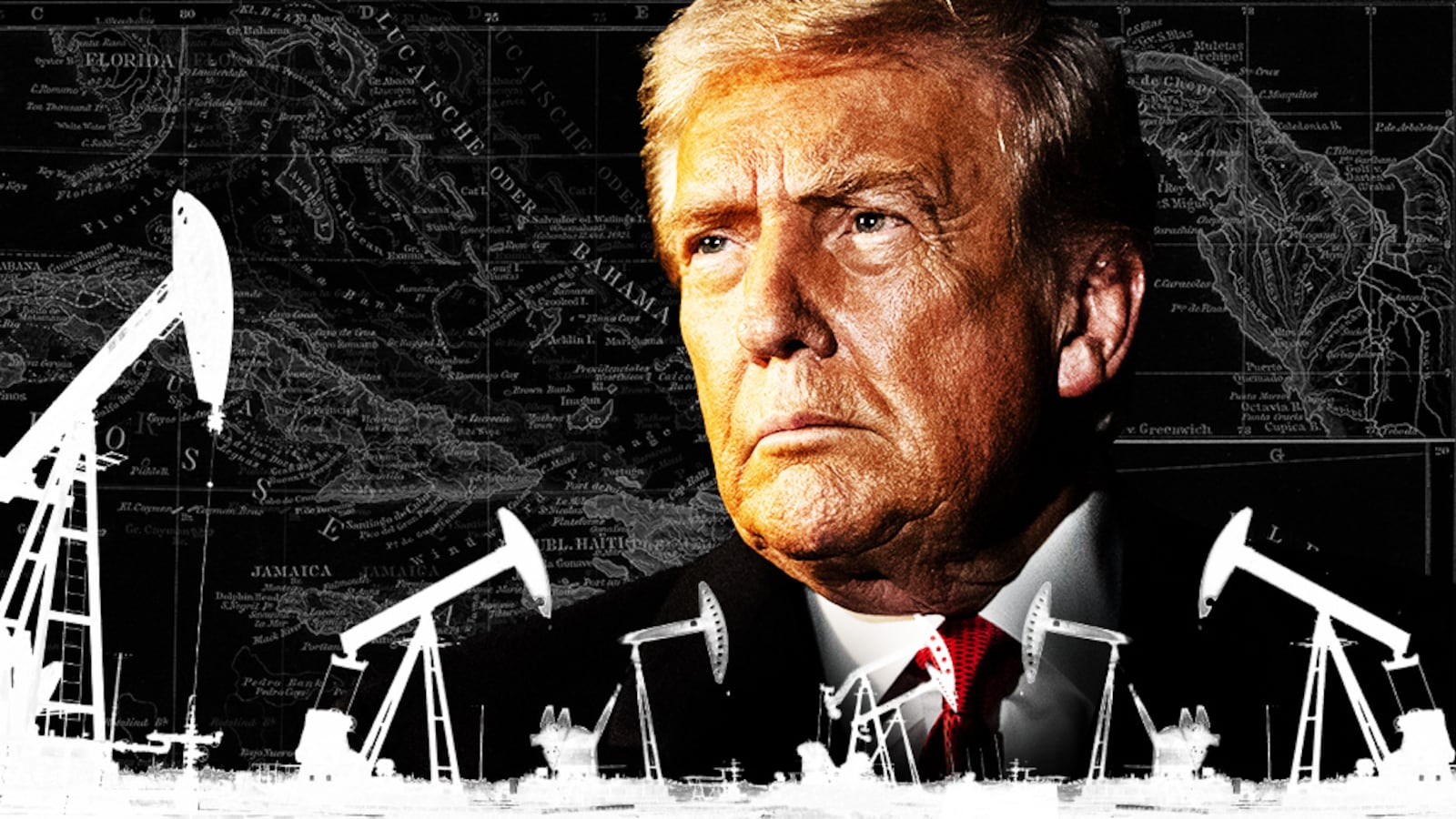
President Donald Trump has unveiled his overarching goal in removing Venezuelan leader Nicolás Maduro: to assert American dominance of the Western Hemisphere with a new foreign policy: the “Donroe Doctrine”.
Speaking after Maduro was captured in the dead of the night in a stunning military strike, Trump revealed that the U.S. would now “run” Venezuela, seize its oil, and may soon take aim at the “failing nation” of Cuba.
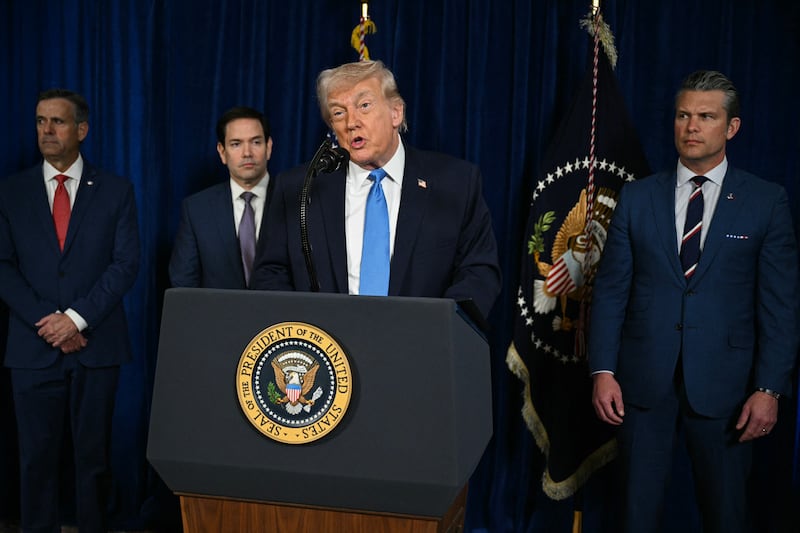
But as critics hit out at the extraordinary intervention, the president said it was rooted in the “Monroe Doctrine”: a two-century old policy of U.S. leadership in the Western Hemisphere, which Trump has now rebranded in his own name.
“The Monroe Doctrine is a big deal, but we’ve superseded it by a lot. By a real lot. They now call it the ‘Donroe Doctrine’,” he said of the original 1823 doctrine named after President James Monroe.
“American dominance in the Western Hemisphere will never be questioned again,” Trump added.

Maduro’s capture was the culmination of an extensive campaign to oust the authoritarian, who the U.S. has long argued was an illegitimate leader running a “narco-state”.
The administration has been ramping up the pressure on Venezuela for months, assembling a massive military presence in the Caribbean, intercepting two Venezuelan oil tankers and killing dozens of people in legally dubious strikes on alleged drug boats.
But after repeatedly claiming the pressure campaign was primarily about stopping the spread of illegal drugs, Trump has finally made his true motivations clear.
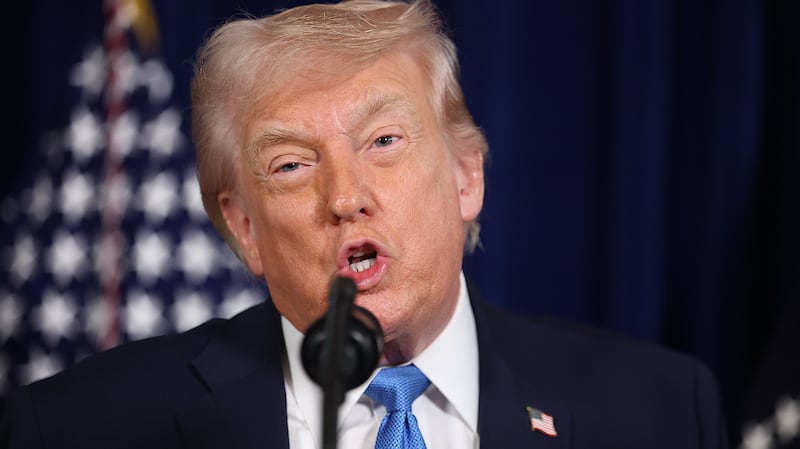
In a rambling and at times incoherent address from his Mar-a-Lago estate, the president revealed the U.S. would take over Venezuela until a proper transition of power could be arranged, raising the prospect of an open-ended commitment.
Declaring that he was going to “Make Venezuela Great Again,” he said the country’s vast oil reserves would also be seized, with U.S. oil companies expected to “spend billions of dollars” to fix the nation’s oil infrastructure and “start making money for the country.”
As for using troops, he said, “We are not afraid of boots on the ground.”
And he also warned that Cuba—an ally of Venezuela—could be next. Secretary of State Marco Rubio, the son of Cuban migrants, spoke after Trump to say that the country was a disaster, run by “incompetent” and “senile” people. Trump, 79, has repeatedly taken tests for his cognitive state, which he claims he has “aced.”

“Cuba is not doing very well right now,” Trump said. “That system has not been a very good one for Cuba. The people there have suffered for many, many years. And I think Cuba is going to be something we’ll end up talking about, because Cuba is a failing nation right now, a very badly failing nation.”
The details of what happened in Caracas will therefore be seen across Latin America as a lens into the “Donroe doctrine”—and a demonstration of the overwhelming military might commanded by the man the doctrine is named for.
Maduro was captured in what Trump described as a “heavily fortified military fortress in the heart of Caracas.”
“The lights of Caracas were largely turned off due to a certain expertise that we have,” he noted.

Air Force General Dan Caine, chairman of the Joint Chiefs of Staff, said U.S. forces had rehearsed their maneuvers for months, learning everything about the Venezuelan leader, including what he ate, details of pets, and the kind of clothes he wore.
The raid lasted about 30 minutes, and while no U.S. troops were killed, some were injured and an American helicopter was hit in the attack.
But Trump, who did not get Congressional authorization for the strike, has framed the intervention as both a national security measure and an economic opportunity.

Flanked by Rubio, Caine and Defense Secretary Pete Hegseth, Trump invoked the Monroe Doctrine, which declared that the Western Hemisphere was closed to further European colonization and warned outside powers against interference in the Americas.
Trump’s version of the doctrine was first flagged in a National Security Strategy released last year, which outlines Trump’s vision for the global order and claimed the right to dominate Latin America.
In it, America asserts dominance over its hemisphere, refocuses on competing with China and deprioritizes engagement with other parts of the globe, such as Africa.
But the raid has already sparked a backlash from parts of Trump’s MAGA base, including former ally Marjorie Taylor Greene, who said this is not what they voted for.
Fellow Republican Brian Fitzpatrick said in a statement that while Maduro was a “narco-terrorist dictator” who terrorized his people, “the only country that the United States of America should be ”running” is the United States of America.”
“The United States should join the international community in monitoring and overseeing a free and fair election in Venezuela, allowing the Venezuelan people a pathway to a true democracy,” the Pennsylvania representative said.
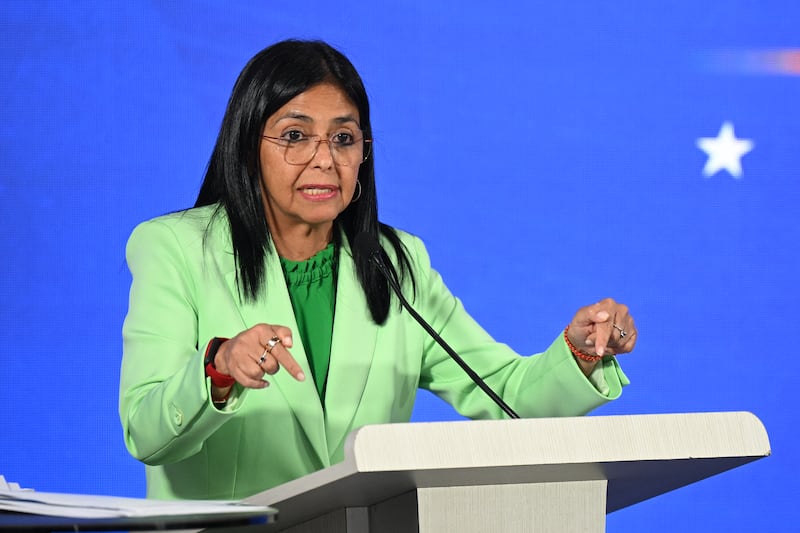
Countries such as China, Russia, Colombia and Mexico have also lashed out, while Delcy Rodríguez, who had been Maduro’s vice president, accused the U.S of invading her country under false pretenses, only hours after Trump claimed she had spoken to Rubio and said she would do whatever he wanted.
“There is only one president in this country, and his name is Nicolás Maduro Moros,” she said.
It was the first explicit challenge to the Donroe doctrine: It may not be the last.