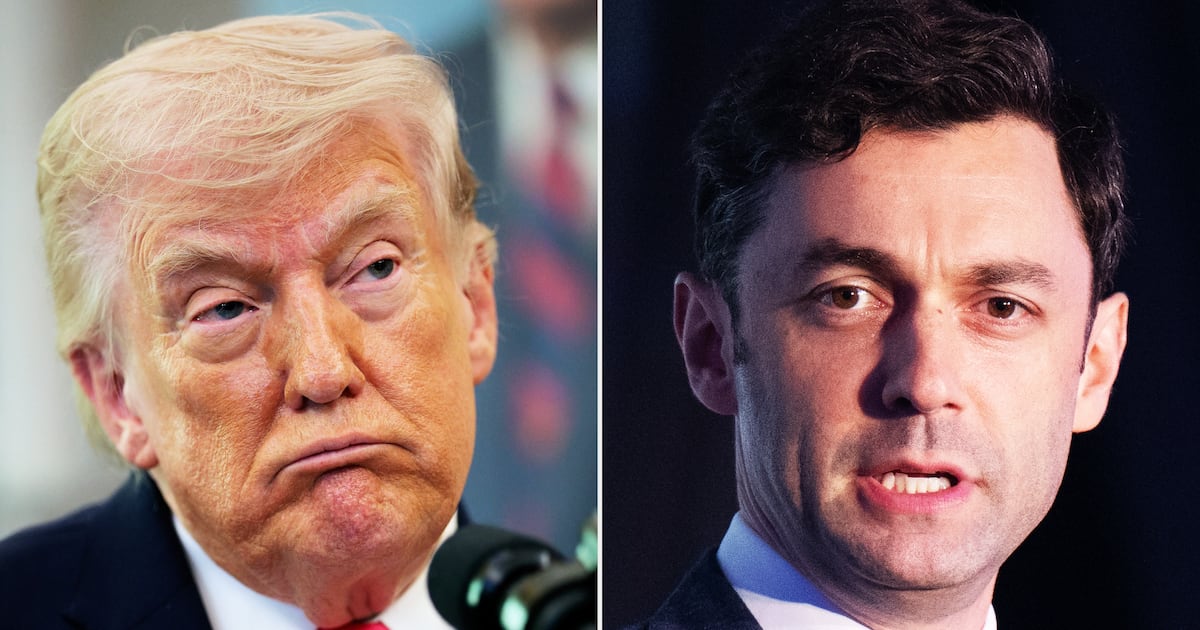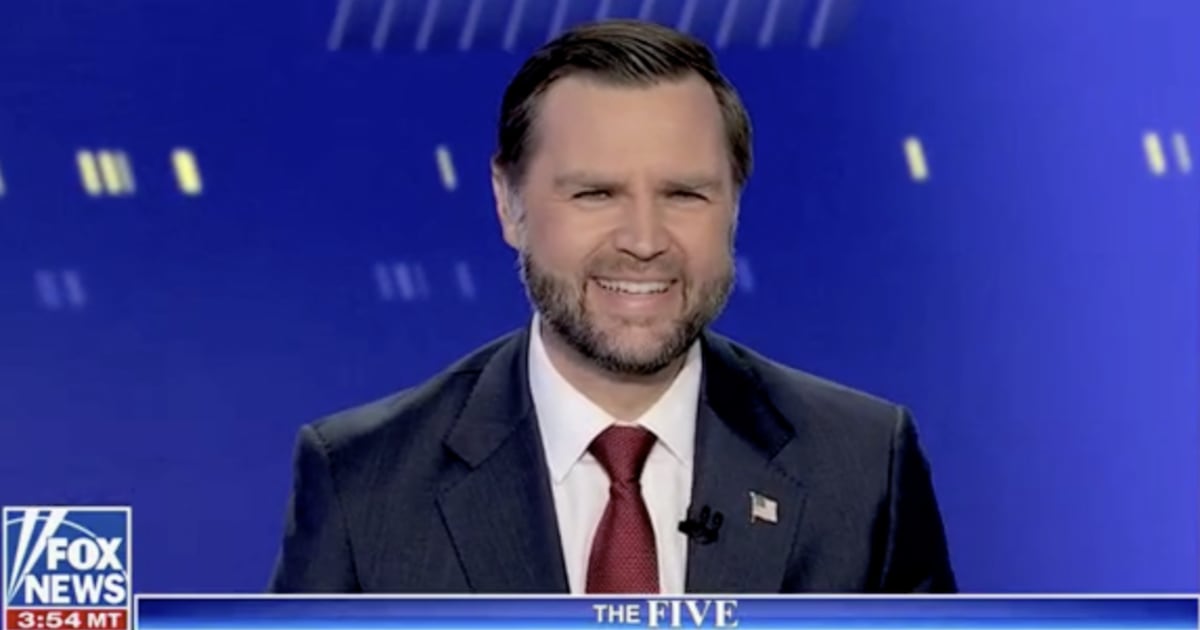
There is no doubt that JD Vance is one of the smuggest, smarmiest politicians in modern American history. And that is saying a great deal, given that politics attracts the smug and smarmy like moths to a flame. It is saying even more when you acknowledge that we live in a true golden age of smugsmarm, lit by that flame to the unctuous, insincere, condescending and insufferable, Donald J. Trump.
Consider how many prime examples of smugsmarm we have to choose from: Scott Bessent. Karoline Leavitt. Mike Johnson. Greg Abbott. Ron DeSantis. Pete Hegseth. Matt Gaetz. The Huckabee family. Vivek Ramaswamy. Most Fox News hosts. Many Fox News guests. Pam Bondi. Kristi Noem. Melania. Jared. Ivanka. Don, Jr. Eric.
But among all these, there is something about JD that is especially odious. It could be that he condescends to everyone. It could be that he has made a career of transparent insincerity. It could be that he is a protege of evil oligarch Peter Thiel. It could be the feeling he communicates every time he opens his mouth. It could be the most punchable nose in the long history of punchable noses. It could be his beard.

All of which are good reasons to celebrate the fact that, in the short but incredibly undistinguished political career of this shapeshifting tool of GOP puppet masters, this past week is certainly the worst he has ever had.
That is, of course, setting the bar pretty low, since he did virtually nothing as a senator except switch positions on critical issues—like what he thought about Donald Trump; he has done even less as Vice President except to ensure that people think twice about letting anything happen to Trump.
Prior to this past week, JD.s greatest hits as VP were seeking to embrace Charlie Kirk’s widow a little too hard, working to embrace white supremacist Christian nationalism (also too hard… way too hard), turning off all of Europe with a super irritating lecture at the Munich Security Conference, and doing everything he could to position himself to succeed Trump in 2028 (if not sooner).
Which is to say, he has not done much.
But this week, Trump gave JD the two most significant assignments of his time in office. First, he was dispatched to Hungary to support Viktor Orban, the man at the head of the MAGA-Putin ticket for re-election as the country’s Prime Minister. Then, he was sent off to lead the U.S. negotiating team seeking an end to the war in Iran.
For Trump and the GOP, these were both vitally important.
In the case of Orban, who had served 16 years as the head of Hungary’s government, there is no world leader other than Putin to whom the U.S. president and the U.S. Republican Party have attached themselves more closely. Orban was invited to CPAC conferences, to Mar-a-Lago, hailed by Trump as a political soulmate and offered up as an example of the anti-democratic, ethno-nationalist ideal emulated by MAGAworld. On a regular basis, he not only supported Trump but advanced the Putin-Trump agenda with efforts to weaken and obstruct the EU and NATO and, in particular, to undermine European-U.S. efforts to support Ukraine in its defense against Russian aggression.
What is more, under Orban, Budapest became a hub of promotion for a global right-wing, ethno-nationalist movement that extended far beyond Washington and Moscow and has included Netanyahu in Israel, Modi in India, Erdogan in Turkey, Bolsonaro in Brazil, Milei in Argentina, LePen in France, Vucic in Serbia and more. Furthermore, the city also became a conduit for Russian money into those parties.

That is why it was so important to Trump that Orban win. That is why Trump sent the second-highest-ranking elected official in the U.S. That is why Vance stumped for Orban (while, in a truly hypocritical and therefore completely in-character display, condemning European efforts to endorse or support Orban’s opponent, Peter Magyar).
Things were not looking good during Vance’s visit. They were looking worse when, after his visit, polls showed that Orban’s support actually dropped as a result of the public display of support from Vance—in one case by as many as three points.
And they looked worst of all late Sunday when, in the wake of historic turnout among Hungarian voters, and despite the many measures Orban had introduced to give himself an unfair electoral advantage, the Trump-Vance candidate was absolutely crushed in the elections.
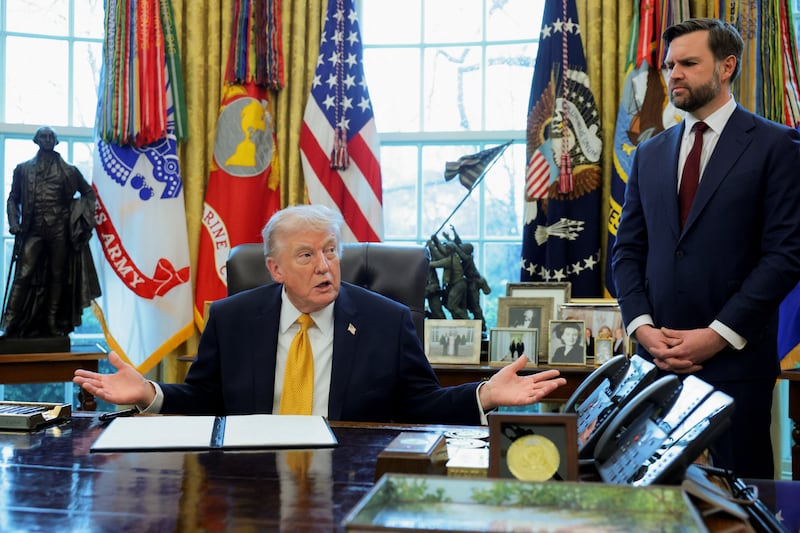
This was bad news for Vance in multiple respects. He was a flop on the campaign trail. A key source of support for the GOP is gone. A roadmap for how to beat authoritarians with turnout and active calls for accountability was offered up that could be relevant in the U.S. And with Vance’s approval ratings already among the lowest ever recorded for a vice president at this stage of an administration—with some showing a net negative rating of minus 25 percent and almost two-thirds of all voters viewing him unfavorable—his already murky future in American politics now looks even bleaker.
Indeed, with global politics sometimes moving in waves, the possibility that the Orban loss could trigger other big setbacks for anti-democratic, racist coalitions worldwide seemed to grow. Netanyahu will face an election later this year; with the Israeli populace already tiring of him and, as it turns out, with his Iran war, he too appears in jeopardy. Closer to home, so too does the GOP in the U.S. midterms—especially if the party remains closely associated with its unpopular leaders and their hugely unpopular policies. (A new CBS News poll shows support for Trump-Vance policies in the toilet, with fewer than a third of those polled supporting their handling of inflation, 35 percent support for their handling of the economy, 36 percent support for their debacle in Iran and only 41 percent support for their management of immigration issues.)

When it comes to his biggest substantive role yet in diplomatic matters, Vance’s trip to Pakistan to lead the U.S. delegation in negotiations with Iran was also a complete fail. Only five Americans, none experts in the issues in play, showed up to negotiate with 60 Iranians. Vance was not really empowered to negotiate, only to offer Trumpian ultimatums. Those did not go over well with the Iranians, who feel as though the longer this war goes on, the more leverage they gain.
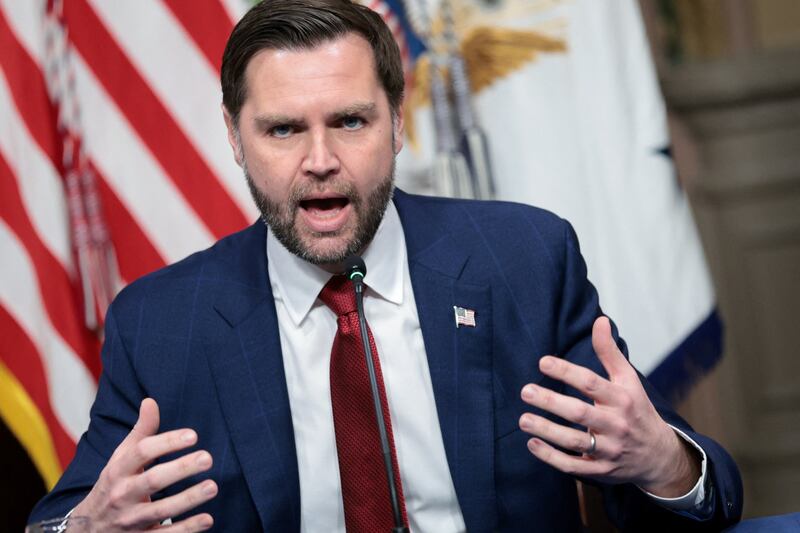
So after less than a day of talks, Vance and company declared defeat and headed home. They achieved nothing. The hugely costly, unpopular, illegal Trump-Netanyahu war against Iran was not only no closer to a solution, but within hours Trump announced a blockade of Iran that was certain to exacerbate the global energy crisis, unsettle markets, and lead to further conflict.
Given two meaningful jobs, Vance failed at both.
Given how unpleasant Vance is, you may feel a bit of schadenfreude welling up. Couldn’t happen to a bigger creep, you might be thinking.
And you would be forgiven if that was your first impulse.
But, Vance’s humongous double-failure is not something to celebrate merely because it takes the arrogant prick down a notch or two.
No, there are bigger reasons.

Because the Orban defeat really is a blow to Trump and the GOP’s hard right. Not just because Orban was their rockstar or because it was, overall, a good day for democracy, but because if investigations into Orban’s corruption now take place, it is almost certain that ties to the Kremlin, dirty Russian money, and American political leaders and groups will be further exposed.
Trump can control the U.S. Department of Justice. But the more investigations that can reveal the extent of his corruption or his ties to Epstein or other such matters of high sleaze, the worse an already bad 2026 is going to be for Trump and Vance.
All those are very good things.

So too, are the lessons of the Hungarian victory that may be applied here in the U.S. One, the way to beat autocrats who are inclined to cheat is to maximize turnout. Make the margin of victory too big for anyone to cry foul. Two, make demanding accountability a centerpiece of the campaign, as Magyar did (and did again in his victory remarks). Voters are disgusted with corruption and abuses of power and want to make sure that leaders don’t skate off with their ill-gotten gains or having damaged their countries but never have been penalized for it.
And to my way of thinking, there is something even more important to be derived from Hungarian campaign. While Magyar was a center-right candidate, he was also clearly pro-democracy, pro-EU and pro-NATO. Clear stances on matters of principle matter. But also, old-school right-versus-left political debates are pretty meaningless in this day and age. Orban’s message, like Trump and Vance and MAGA’s, is one that celebrates returning to the past. Magyar’s message was about the future, about making Hungary work for Hungarians in the context of the world that lies ahead.

If Americans who oppose Trump and Vance take away one thing from this, I hope it is a commitment to reject old arguments about where candidates or voters fall on “the political spectrum” and to focus instead on the key dividing line issue in our politics today: That of the differences between those who seek to turn back the clock and those who want to chart a new course for a stronger, more prosperous, more peaceful American future.
Clearly, such a future is one in which we finally put asinine, costly, indecent wars behind us, as well as rejecting the old ideas guiding Trump’s foreign policy (like imperialism, out-of-control American exceptionalism or corporatist, oligarch-driven hypercapitalism). Wars like that with Iran are impediments to our achieving our best future and, as it happens, suit the goals and objectives of our potential rivals in the new geopolitical reality we are entering, notably the Chinese.
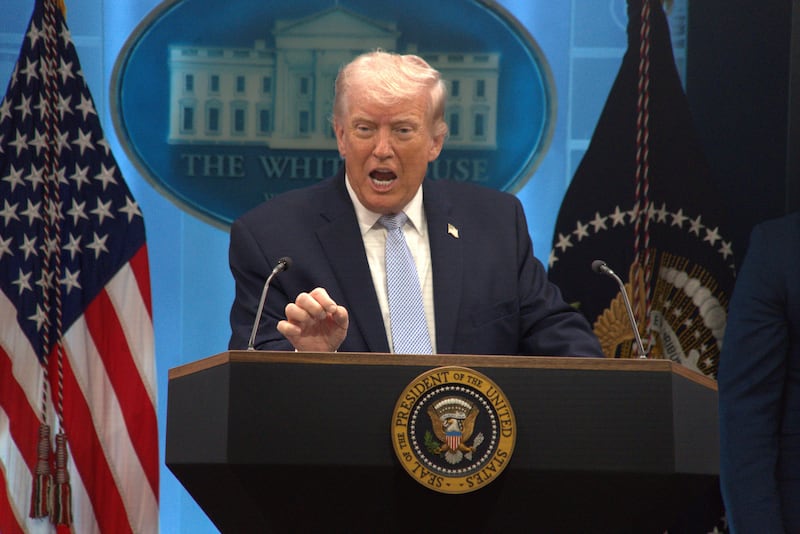
The Iran War is Trump distracting from his decades-old scandal with Jeffrey Epstein by acting on his still festering anger that a Black man became president and actually achieved some good in the world— like the original nuclear deal with Iran, which Trump tore up and the terms of which we will be lucky to recreate. In so doing, he is emulating the foreign policy of the neocons he once condemned, and of the late 19th-century neo-imperialists. He is squandering what we should be investing in our people and in R&D and in infrastructure and education in order to better compete in the rapidly changing global economic environment and thereby he is not only causing death and destruction today, but he is doing damage whose toll will grow for many years to come.
In other words, there are many reasons to savor Vance’s struggles, but the most important among them is that they could very well help restore the focus of the American people on the issues that really matter and, above all, on the paramount importance of looking forward rather than trying to cling to a past we would do well to put behind us.