When Hulu’s adaptation of Margaret Atwood’s seminal dystopian novel The Handmaid’s Tale premiered just after Donald Trump’s first inauguration, it met the political moment in a way no one could have anticipated.
In 2017, there was a collective sense of disbelief among those who opposed the new president. The Handmaid’s Tale reflected that, showing us what could happen—totalitarianism, civil war, concentration camps—if we didn’t fight back. It proved prophetic, with the final season last year premiering just as Trump was taking office for the second time and enacting an agenda that felt more and more like the fictional Gilead.
While The Handmaid’s Tale may have wrapped up its story, a sequel series has already arrived. The Testaments, based on Atwood’s 2019 novel of the same name, picks up where The Handmaid’s Tale left off and once again feels eerily relevant to the state of American politics.
The Handmaid’s Tale wielded flashbacks to the “before times” to remind viewers what was lost. The Testaments puts us firmly in the totalitarian theocracy of Gilead, roughly 15 years ahead, when the environmental disaster has stabilized, and the use of “Handmaids” is more of a rarity since the society’s Wives are now able to get pregnant and carry babies to term themselves. This is Gilead’s normalcy. The Testaments resists looking back to how they got there and instead shows how the teen daughters of Gilead might find their way out.
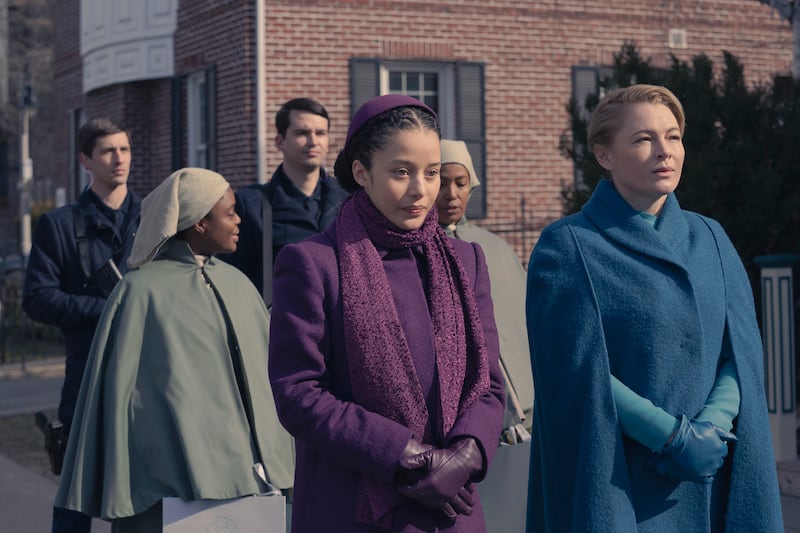
Our teenage protagonist is Agnes, played by the 25-year-old Chase Infiniti, fresh off her breakthrough performance in the Best Picture winner One Battle After Another. Agnes, who was born as Hannah, is the daughter of The Handmaid’s Tale’s June (Elisabeth Moss). The final season of The Handmaid’s Tale ended with June unable to extract Hannah from Gilead, thus paving the way for The Testaments.
Agnes, who is mostly oblivious about her real parents’ attempts to rescue her, attends an elite preparatory school with other daughters of other Commanders: Shunnamite (Rowan Blanchard), Becka (Mattea Conforti), and Huldah (Isolde Ardies), who are desperate to have their first periods so they can get married.
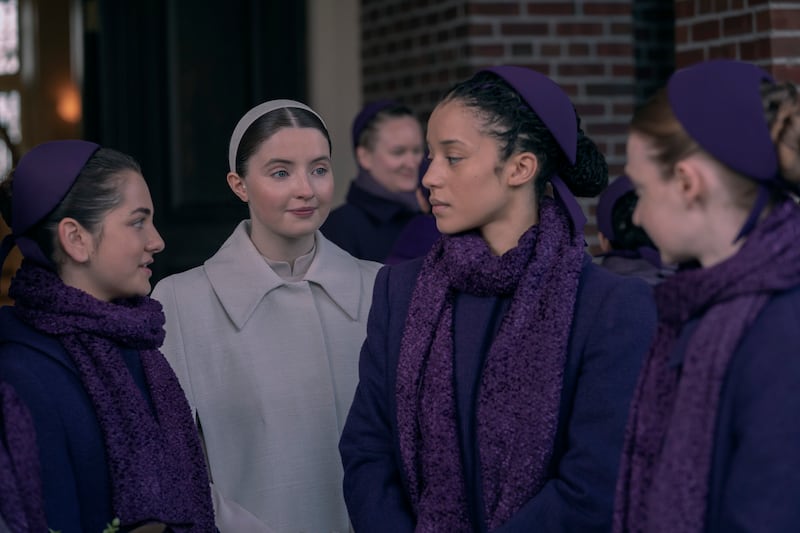
When so much of pop culture is full of virtue signalling, it’s challenging to follow girls who have been sold a lie about their worth and purpose, buy into the myth of their theocratic society wholesale. Infiniti, in particular, is excellent as someone you want to root for, but makes it so damn hard by virtue of her ignorance, stubbornness, and confusion as her world breaks open.
“It sounds horrible,” she replies to someone from outside of Gilead describing their freedoms, calling her way of life “so much less confusing.” It’s not hard to hear the echoes of modern “tradwife” philosophy—why work all day for the man and be debilitated by a proliferation of options when you could stay home and get back to basics?
“I guess, the way I said it,” Daisy (Lucy Halliday), a defector from Canada who attends Agnes’ school. “But at least we get to choose.”
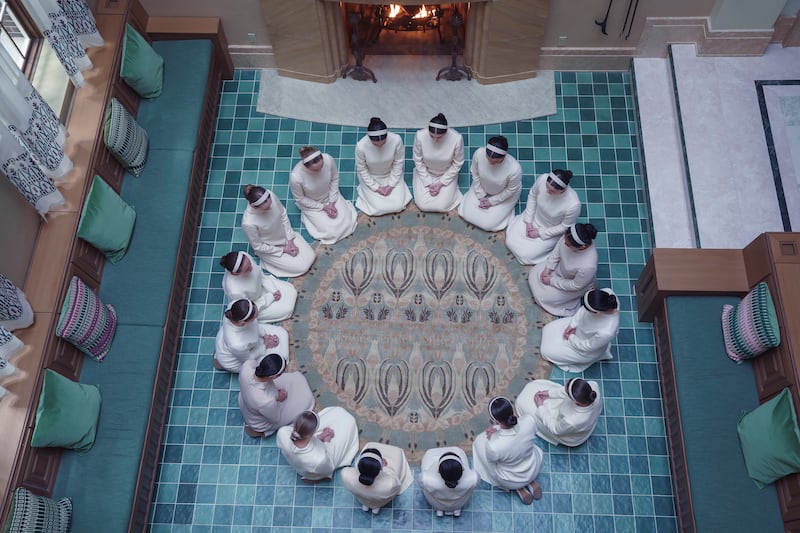
Daisy is our dual protagonist and a lifeline to the resistance movement. Though The Testaments was filmed last year, some of the Toronto-set protest scenes evoke the streets of Minneapolis this past January. Meanwhile, within Gilead, masked operatives police all manner of seemingly innocuous errands that the schoolgirls undertake.
“Girls in Gilead have spent their lives being vigilant in a way you never have,” Daisy is told when she expresses outrage that they won’t rise up against the injustices they face. Even worse, they don’t see them as injustices in the first place.
The Testaments also isn’t above taking a dig at the plague of unqualified bros currently running the U.S. government. “Before this guy was a Commander, he worked in Crypto,” is one such example.
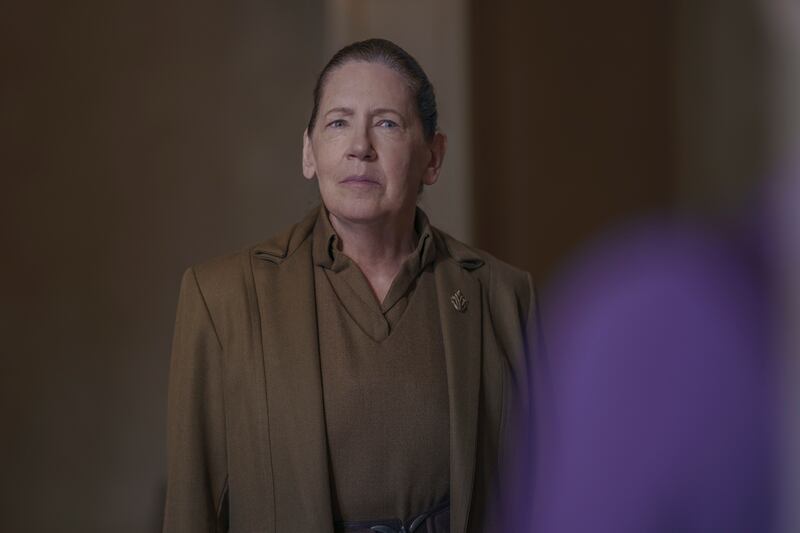
The primary link to the original series is Ann Dowd’s Aunt Lydia. After the concluding events of The Handmaid’s Tale, Lydia has been pardoned by Gilead and permitted to work with Agnes and her schoolmates. The Aunts now even get to read and write, something that was previously forbidden for women.
“What was I to write? The crimes of these men…?” Lydia says at one point. “No, that could bring them down.”
Over a long six seasons, The Handmaid’s Tale ultimately became a slog, with viewers anecdotally tuning out by the second season because of the relentless misery and abuse the women had to suffer.
The Testaments still has that—this is Gilead after all—but by focusing on the perspectives of Agnes and her schoolmates, the show employs a much-needed vibe shift, becoming, at times, an incredibly fraught teen melodrama. You know, just with child marriage, pro-natalism, and autocracy.
Atwood has always maintained that she based The Testaments and its predecessor on real-life events. In 2026, that has never felt more true.