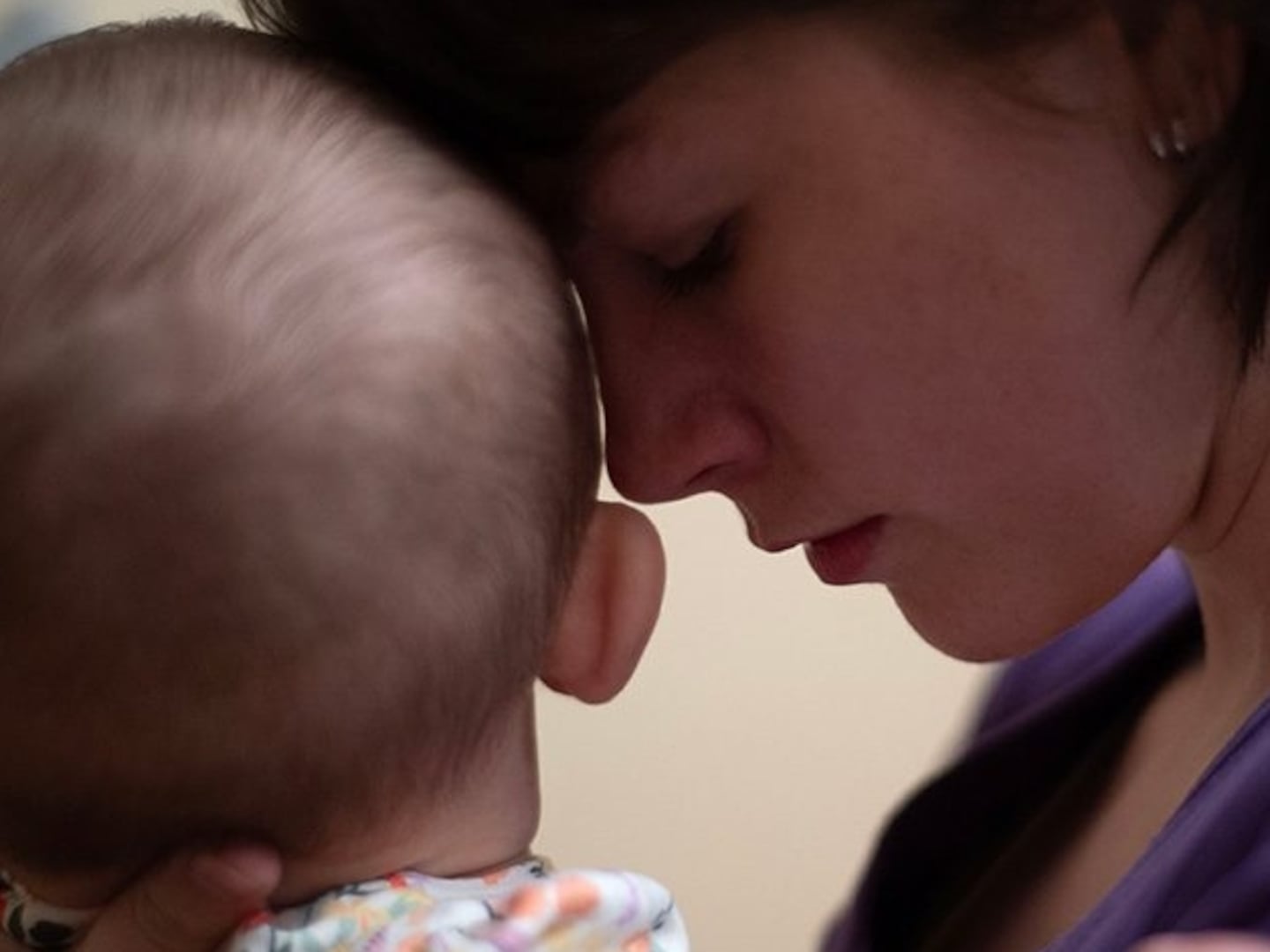
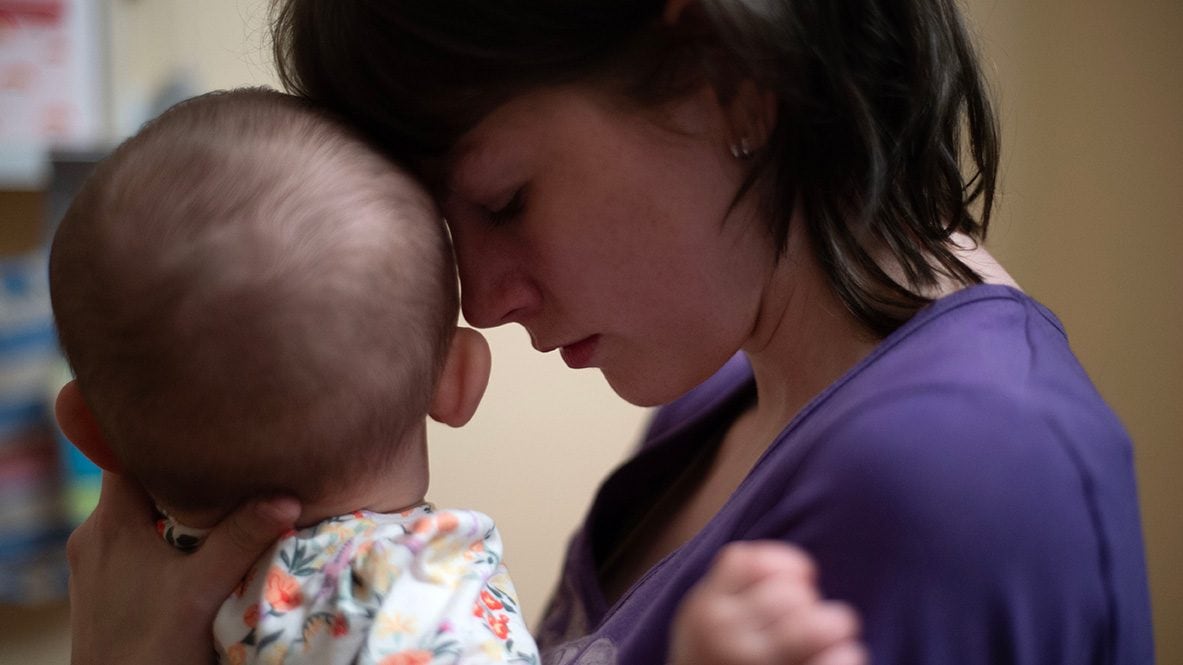
Jean-Pierre and Luc Dardenne are world-class international auteurs whose deep, abiding humanism informs and electrifies their social-realist dramas of everyday people struggling to cope with arduous circumstances.
That profound empathy and insightfulness are once again on full display in Young Mothers, which follows four teenage Belgian girls living at a center for expectant and new mothers.
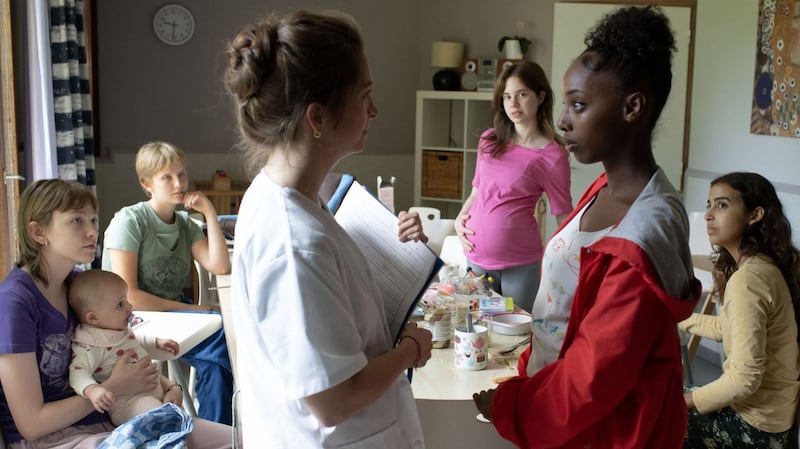
A far cry from MTV’s sensationalistic Teen Mom franchise, the auteurs’ latest (in theaters January 9) is a wrenching portrait of the interconnected personal, familial, and cultural dynamics that conspire to complicate, if not thwart, these individuals’ attempts to forge a healthy and happy future.
Understated, graceful, and moving, it’s the first great film of 2026.
The Dardennes have long been cinema’s preeminent empathists—as well as its most acclaimed—beginning with 1996’s La Promesse and 1999’s Palm d’Or-winning Rosetta. They again won that coveted prize in 2005 with the devastating L’Enfant, and in the years since, they’ve earned near-universal plaudits, be it for 2008’s Lorna’s Silence (which netted them the Cannes Film Festival’s best screenplay award), the Marion Cotillard-headlined Two Days, Once Night, or the more recent Young Ahmed and Tori and Lokita.
As directors who began their careers as documentarians, the brothers have habitually focused on slice-of-life stories, often with young men and women at their core, and in that regard, Young Mothers is of a piece with their prior masterworks, weaving a tapestry of pain, fear, shame, suffering, and desperation from the ordeal of a quartet of residents at a center dedicated to helping them care for their newborns.
Learning how to change diapers, prepare bottles of formula, and give baths, however, is the easiest part of these single girls’ lives.

For Perla (Lucie Laruelle), nurturing baby Zoé is of less immediate concern than reconnecting with the child’s father Robin (Günter Duret), a teenager who exits a juvenile detention facility (where he was locked up for unknown reasons) and promptly gets high, admits that he hasn’t told his mom about Perla or Zoé, and doesn’t commit to the 300 euro/month apartment Perla has found for them because it’s too far away from his auto garage job in the city.
At least Perla can see Robin. Jessica (Babette Verbeek), who’s due to give birth in two weeks, is denied access to her partner by his parents, who censure her for not letting them pay for her abortion, claiming that she “took them for a ride” and is after their money.
Getting the young men in their lives to legally recognize their parentage is a more or less futile endeavor for both Perla and Jessica, the latter of whom is primarily preoccupied with meeting her own mother, Morgane (India Hair), who gave her up for adoption. Stood up at a bus stop at the start of Young Mothers, Jessica is wracked with longing for a foundational maternal relationship, and it’s not difficult to see that she’s potentially repeating an unhealthy cycle.

If paramours are a problem for these women, so too are moms, as evidenced by the plight of Ariane (Janaïna Halloy Fokan), whose visit with her mother Nathalie (Christelle Cornil) is as tense as they come, thanks to the fact that Nathalie is an alcoholic and has an abusive boyfriend whose voice puts the fear of God in Ariane.
Nathalie is thrilled to see her grandchild Lili and has even made up a nursery for her, but Ariane doesn’t share this dream of quiet domesticity. Unconvinced that Nathalie has turned herself around, and unwilling to raise her daughter in the sort of single-parent poverty she endured, she’s preparing to have Lili adopted.
Julie (Elsa Houben) isn’t grappling with terrible parents or a lousy boyfriend, as Dylan (Jef Jacobs) is a caring and involved new father. Nonetheless, things aren’t easy for her, courtesy of a drug addiction and crippling bouts of anxiety. When not doting on her tyke Mia, Julie attends a training school to become a hairdresser, and she and Dylan are in the process of securing their own flat.
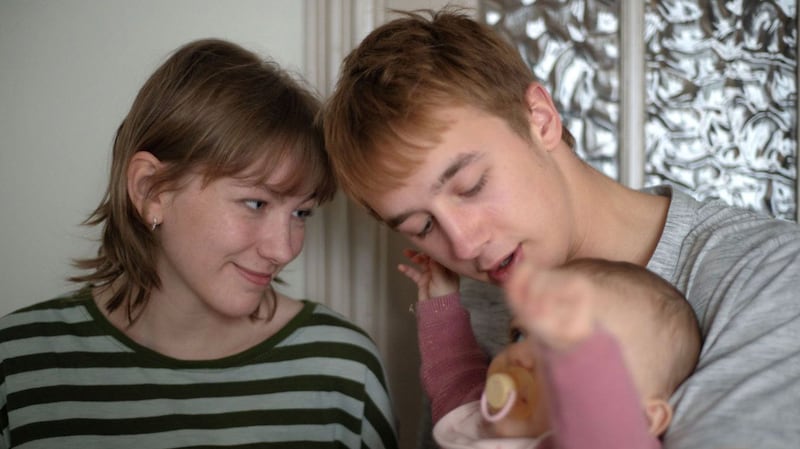
Still, the threat of relapse looms large over her every waking second, such that even at a moment of triumphant happiness (and relief), Julie stumbles in her recovery, jeopardizing everything she’s worked to build for herself and her progeny.
Young Mothers neither preaches nor explicates via exposition. All its particulars materialize naturally from the everyday action at hand. The Dardennes only name some of the adults working at the center, and they flesh out their main characters’ fraught backstories through conversational references. Throughout, their handheld camera is strictly fixated on its subjects as they navigate hum-drum interior and exterior spaces, its gaze not simply fly-on-the-wall attentive, but intensely up-close-and-personal.
As is their custom, the sibling artists employ verité aesthetics that create a piercing sense of authenticity and urgency. However, beneath that façade of realism, they prove themselves master dramatists, locating in unaffected encounters and incidents a wellspring of truths about the logistical and emotional difficulties these girls face.
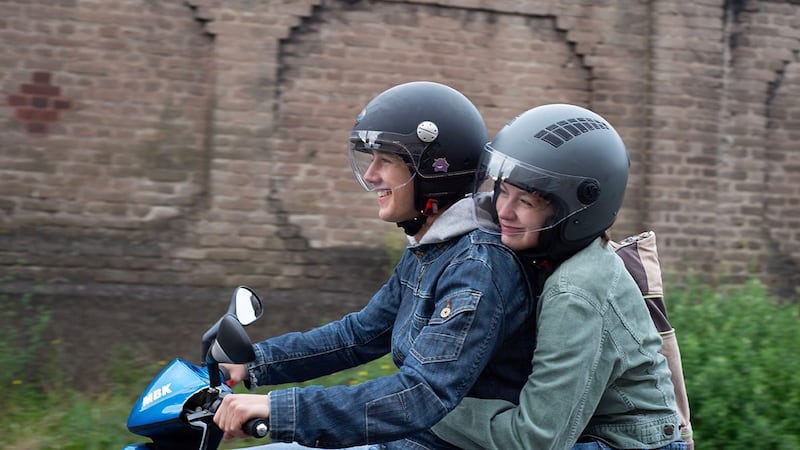
There are no easy solutions for Perla, Julie, Jessica, and Ariane’s dilemmas. And though an outdoor lunch finds fellow young mother Naima (Samia Hilmi) receiving a toy train in celebration of her being accepted into a railway inspector course, hope isn’t in great supply. Hardships lurk around every corner, as does the potential for making easy, unwise choices, be it Ariane contemplating Nathalie’s redemptive promises or Julie turning to her favorite dealers.
At no point does Young Mothers sugarcoat, addressing its foursome’s embarrassment, regret, anger, and terror via intimate close-ups and prolonged single takes that allow scenes’ tension and dread to slowly, agonizingly mount. Contributing to that atmosphere is a soundtrack devoid of music—the directors’ trademark, unvarnished visuals are married to commonplace sounds of traffic, birds, voices, and newborns cooing and crying.
The Dardennes are so uninterested in showy hysterics that their film’s biggest calamity occurs offscreen—a storytelling tack that prioritizes efforts to persevere over failures. Perla, Julie, Jessica, and Ariane’s troubles are compounded, of course, by their age, and Young Mothers’ performances are poignant precisely because they never lose sight of the immaturity that’s led to this precarious present.
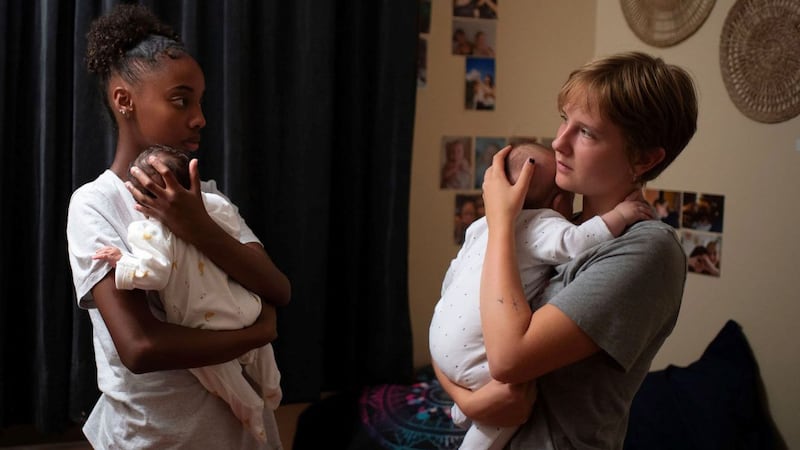
Distrust, hostility, and panic are expected outgrowths of the messes the teens have made for themselves, and yet the directors refrain from judging. Rather, with clarity and compassionate consideration, they seek to understand the forces at play in their tale, whether it’s how yesterday affects today, or the hunger (for love, safety, stability, and optimism) that propels their protagonists forward and which manifests itself most literally in Jessica biting a caregiver in the shoulder.
For the past 30 years, the Dardennes have been acute cinematic sociologists fascinated with the trials and tribulations of young men and women navigating a modern landscape littered with potholes. With the deeply affecting Young Mothers, their eyes remain as sharp as their hearts are big.