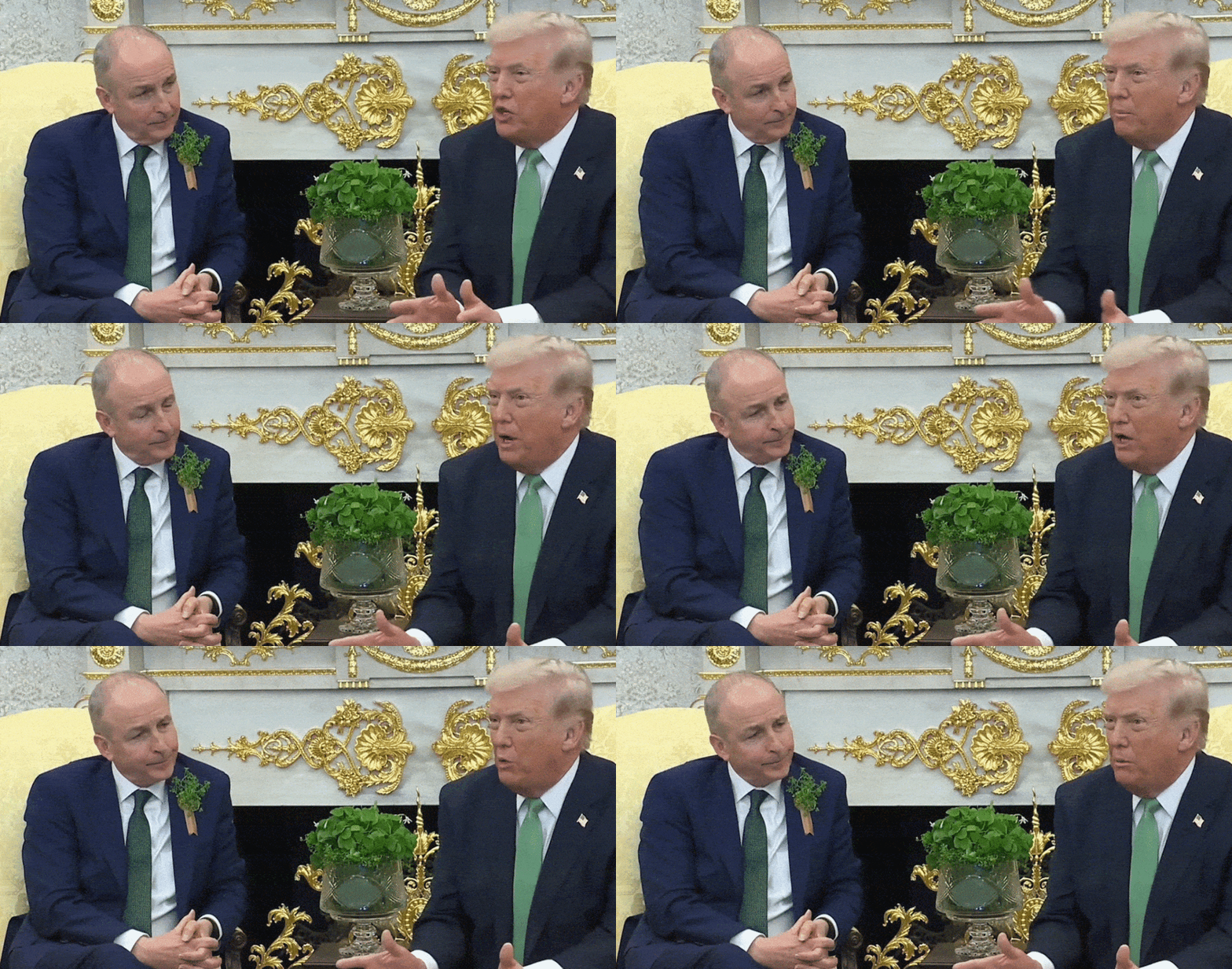
President Donald Trump has claimed wrongly that Cuba was not in a hurricane zone as he spoke about his plans to take over the Caribbean island.
In his remarks, Trump mused about steering the island’s future and dismantling its leadership. He also delivered a distinctive take on its climate.
“It’s a beautiful island, great weather,” Trump said. “They’re not in a hurricane zone, which is nice for a change, you know?”
The 79-year-old president went on to say that under American control, Cuba would not be “asking us for money for hurricanes every week.”
The comment echoes his gripes about Puerto Rico, a U.S. territory that received a direct hit from Hurricane Maria in 2017. Years after the storm, Trump accused the island’s government of complaining and asking for more money.

But contrary to Trump’s remarks, Cuba has suffered many devastating hurricanes in recent decades.
At least eleven hurricanes of category 3 strength or higher have struck Cuba this century, according to the New York Times. Devastation has often followed. Ten people died when Hurricane Irma tore across Cuba in 2017.
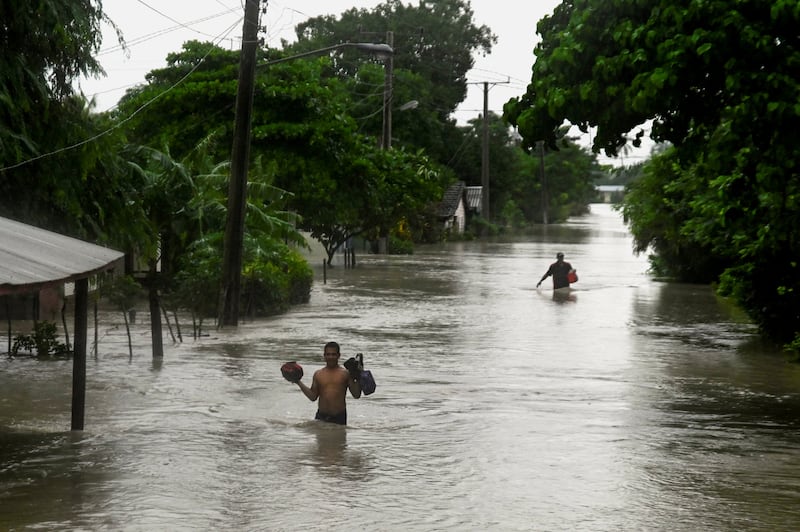
Before that, the island suffered back-to-back blows from two Category 4 storms, Gustav and Ike.
As the Miami Herald reported, by the time Florida is struck by a hurricane, it has often just recently departed Cuba.
In other words, the island is located at the heart of the Caribbean’s hurricane zone.
Trump remarked on Cuba’s hurricanes the same day an unnatural disaster—a fuel shortage—brought about an islandwide blackout.

These blackouts have become more common since the United States blocked exports of oil from Venezuela following the American capture of Nicolas Maduro in January.
The Trump administration has turned up the heat on Cuba’s ruling communist government on diplomatic fronts, too, hosting high-level negotiations between the two nations for months.
On Monday, Cuba’s government announced that nationals living abroad could invest in new businesses in the country. U.S. Secretary of State Marco Rubio said the move was not enough.
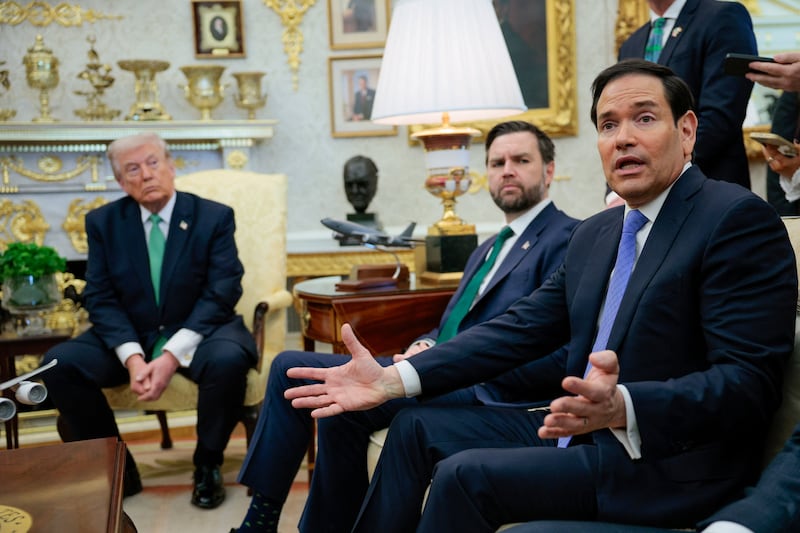
“Cuba has an economy that doesn’t work in a political and governmental system that can’t fix it. So they have to change dramatically,” Rubio said on Tuesday. “What they announced yesterday is not dramatic enough. It’s not going to fix it. So they’ve got some big decisions to make over there.”
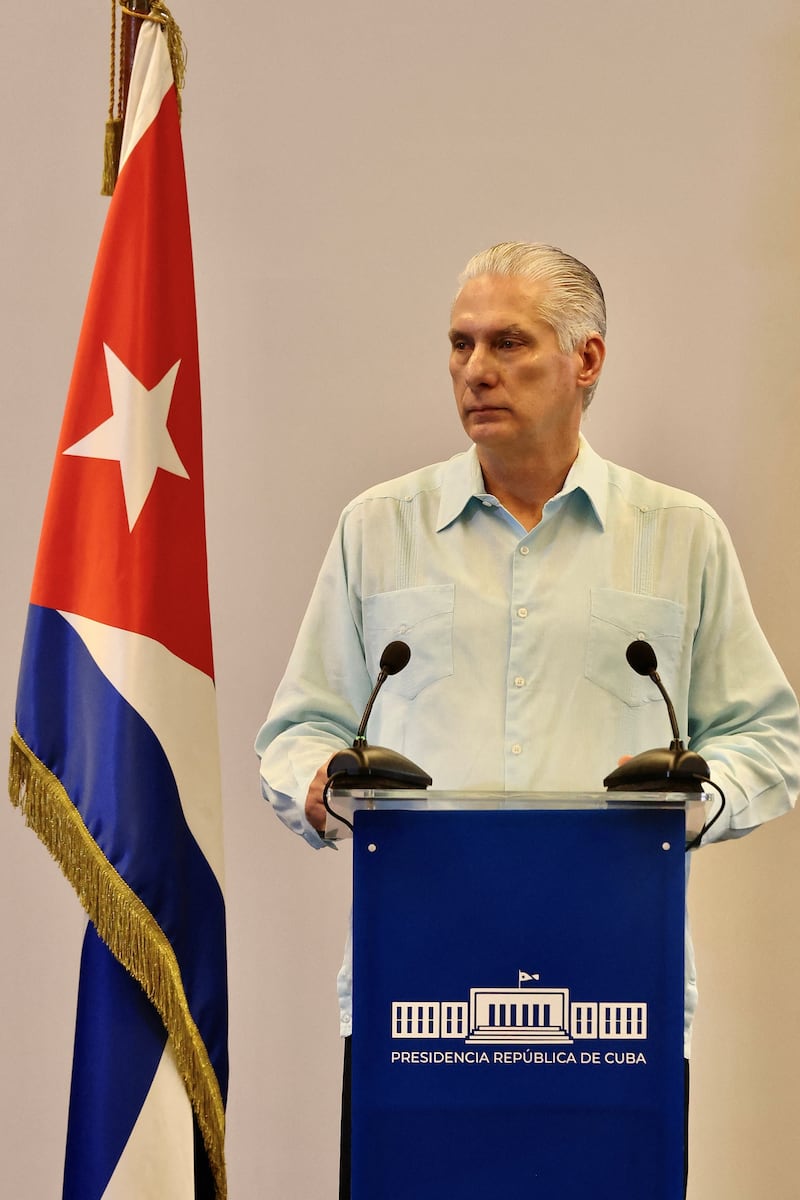
Reporting by the New York Times reveals the White House’s desire to oust Cuban President Miguel Díaz-Canel from power. It is unclear, however, what impact this would have on toppling the underlying regime, which has been in place for 67 years.