Michael is like if you made a cheery biopic of Bill Cosby that ended with his successful run on The Cosby Show, all while avoiding any mention of his notorious private proclivities.
A puff piece that sands every sharp edge from Michael Jackson’s legendary, and scandal-plagued, life story, director Antoine Fuqua and writer John Logan’s long-awaited film (April 24, in theaters) is all “Thriller,” no infamy, presenting an uplifting, crowd-pleasing version of events that, for all its expert impersonations, is simply the palatable half of this sordid tale.
Mentions of alleged wrongdoing (including the several charges of child sexual abuse, such as those raised in the 2019 documentary Leaving Neverland) are nowhere to be found in Michael, whose extensive reshoots and post-production tinkering reportedly did away with any material related to the horrifying accusations leveled against the King of Pop.
What remains is a misleadingly incomplete retelling of Michael’s well-known rise to glory, full of concert recreations that fail to fully live up to the originals, performances that go heavy on scenery chewing, and a focus on Michael’s fraught relationship with his father Joseph (Colman Domingo) as a substitute for this saga’s real, unaddressed ugliness.
Suffice it to say, any biographical film about Michael that dodges his supposed abominable activities—and the rumors, headlines, and court cases they begat—is a deliberate act of whitewashing, and the fact that Michael concludes with a title card announcing “His Story Continues” doesn’t suffice as an explanation for the tack taken by Fuqua and Logan.
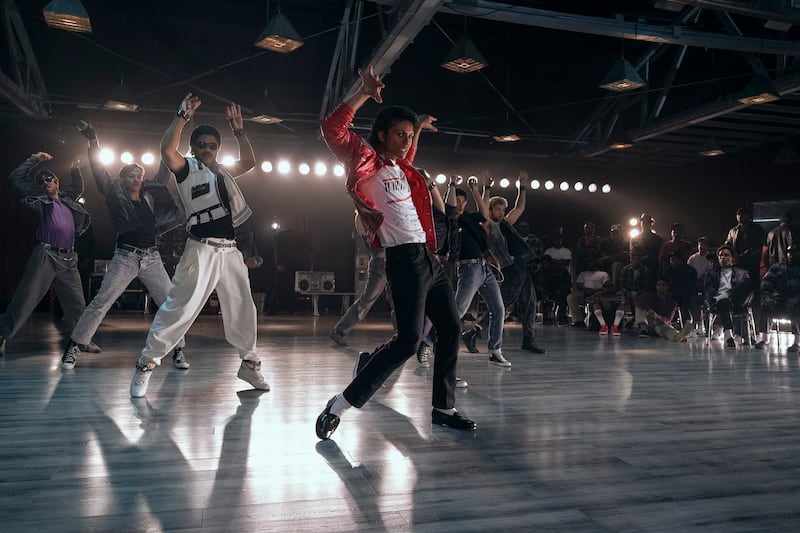
Beginning in 1988 with its subject about to take the stage on tour for Bad, and concluding with an arena performance of that smash LP’s title track, it limits its purview in the most obviously calculated manner possible, transforming Michael’s complex personal and professional odysseys into a condensed and superficial portrait of courageously finding one’s voice by standing up to a domineering daddy.
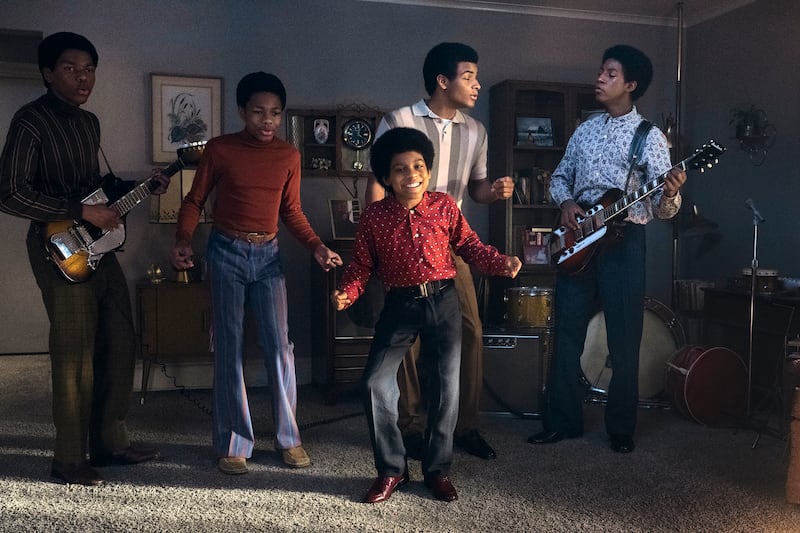
In Gary, Indiana, in 1966, young Michael (Juliano Krue Valdi) enviously watches neighborhood kids play outside before Joseph forces him to keep rehearsing in the living room with his brothers. Joseph is a cruel taskmaster determined to turn his brood into global sensations, telling them over dinner, “You’re either a winner or a loser… You gotta fight for it!”
He has good cause to believe in his offspring, especially the gifted Michael, who at a nightclub drives the crowd wild. Unfortunately, Joseph is a bastard who uses threats and violence to motivate his youngest, with Michael suffering an early belt-whipping for daring to object to a post-gig rehearsal.
Under distracting facial prosthetics, Colman exudes unvarnished stage-father monstrousness, and his lack of subtlety is in tune with the rest of Michael. Destined to be the superstar who never grew up, Michael often reads his favorite book Peter Pan. At a 1968 show at Chicago’s Regal Theater, Motown executive Suzanne de Passe (Laura Harrier) states about the boy, “That’s God-given talent right there.”
That opinion is shared by Berry Gordy (Larenz Tate) during the Jackson Five’s initial Motown studio session, and it’s confirmed by the group’s immediate breakout, which inspires record execs to beam and young female fans to swoon.
Leaping forward to 1978, Michael—now played by Jaafar Jackson, Michael’s real-life nephew and Jermaine’s son—is eager to record his first solo record, but incapable of breaking free from Joseph’s grasp. This is the recurring tension coursing through Michael, whose repetitive storytelling is epitomized by Fuqua’s habit, at every juncture, of abridging via music-scored montages.
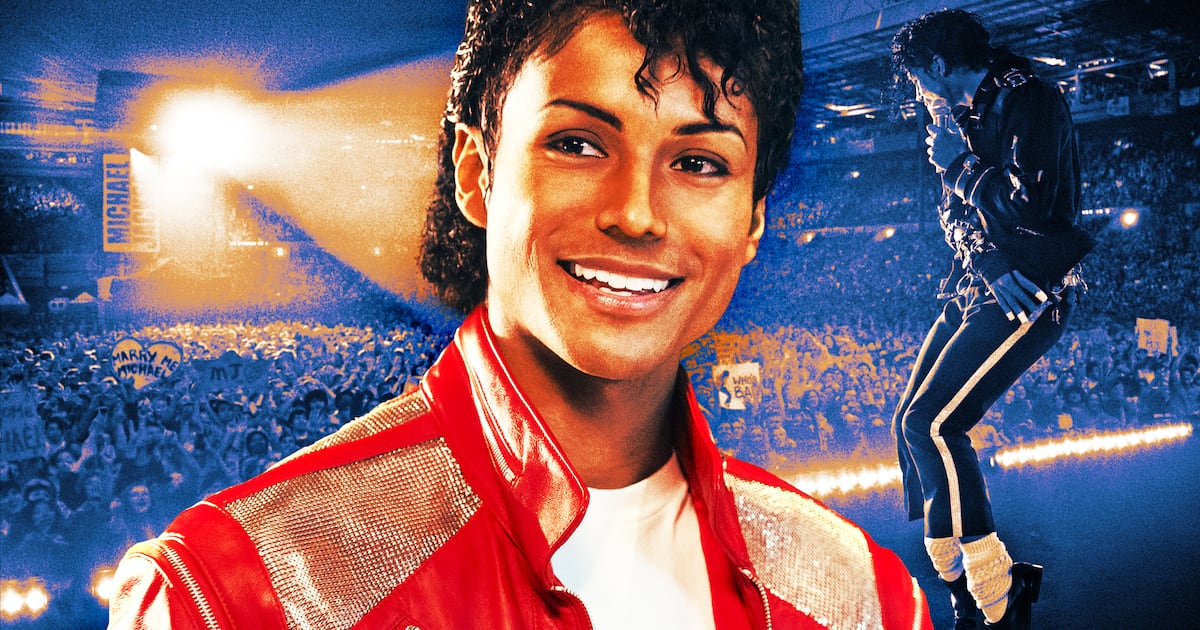
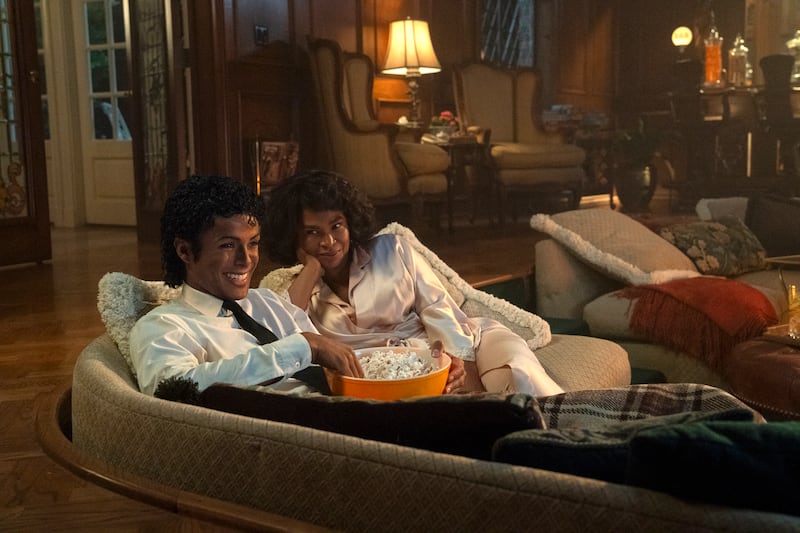
As Michael hits it big with Off the Wall and Thriller, the film vacillates between cutesy personal moments—Michael brings home his pet chimp Bubbles and walks his llama, because animals are his sole friends! Michael goes toy shopping and signs autographs for his fans!—and rousing restagings of the artist’s iconic Thriller videos and concert and award-show routines. It’s a metronomic rinse-and-repeat structure, and only partially enlivened by the fact that both Valdi and, in particular, Jackson look the part and capture Michael’s mega-watt charisma, duplicating his moves and sound with top-notch fidelity.
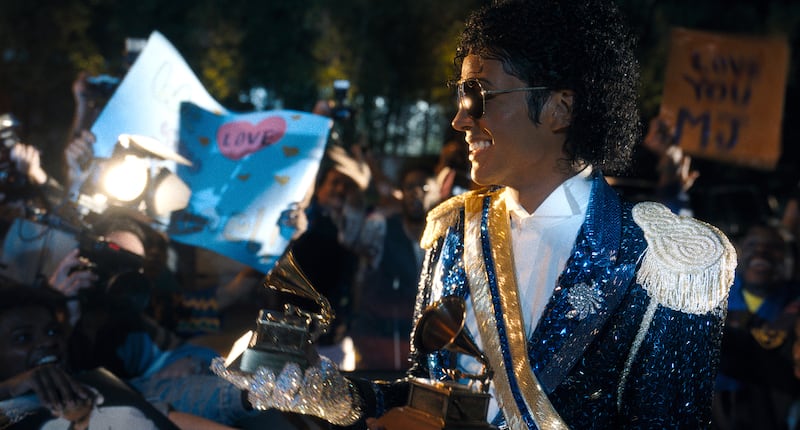
Unfortunately, their turns are to no appreciable end, since Michael aims for nothing more than superficial fan-service lionization.
Over the course of the 130-minute film, Michael enlists the aid of entertainment lawyer John Branca (a flat Miles Teller) to fire Joseph, and he seeks relief from paternalistic tyranny in the arms of his mother, Katherine (Nia Long), who constantly gives her husband the evil eye and yet does little to stand up to him. As for Jermaine (Jamal R. Henderson), Marlon (Tre Horton), Tito (Rhyan Hill), and Jackie (Joseph David-Jones), they’re just anonymous background players given nothing to do or say, as is their sister La Toya (Jessica Sula).
Michael’s most famous sibling Janet, meanwhile, is conspicuously MIA, presumably because she didn’t want to get dragged into this skewed wayback machine.
As with producer Graham King’s prior Bohemian Rhapsody, Michael prefers trailer-ready pronouncements to depth, and the similarities between the two high-profile music biopics extend to their cameos from Mike Myers as big-shot record executives.
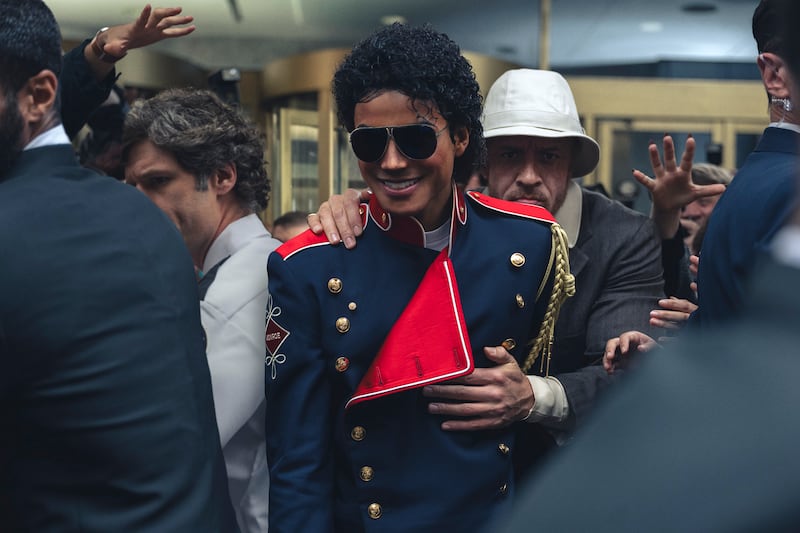
It all borders on burlesque, and that’s even before the film presents multiple scenes in which Michael demonstrates his pure, innocent, childlike heart by visiting sick kids in the hospital—incidents which, considering what’s not depicted, resonate as egregiously manipulative, no matter their basis in reality.
Whether it’s Quincy Jones (Kendrick Sampson) or bodyguard Bill Bray (KeiLyn Durrel Jones), Michael’s apparent vitiligo skin condition or his plastic surgery, Michael fleshes nothing out, and it flops hard trying to generate late calamitous suspense via the burned-scalp injury Michael suffers during a Pepsi commercial shoot.
Because Fuqua telegraphs from the start that things will wrap up before the 1990s arrive, there’s no mystery about where this is headed and what will be left out. The result is sunshiny, glib, and empty—if, admittedly, catchily scored, as the one benefit of having the artist’s estate on board is that the action is awash in Jackson classics.
Ultimately, there’s an understandable reason to make Michael shallow and celebratory (money!), but none of it is artistic. In that way, it betrays its own subject, whose stated desire to creatively express himself honestly and without external restraints isn’t echoed by this meticulously disingenuous affair.